In front of the couch lies the coffee table; to the side the end table. Small, handy and often overlooked, the end table can add a point of interest or finishing touch to your living room’s interior. Have a lounge full of travel souvenirs? Place your latest read on an Arc de Triomphe table to relive your trip to France. Can’t be bothered reaching for your coffee or tea? Bring the tabletop closer to you with a convenient C-shaped design. Feel your living room furniture is a bit on the dull side? Spice it up with a small side table sculpted to look like an elegant peacock. Take a gander at our top 51.

Classical Square End Table
Complement traditional and modern farmhouse decor themes using this square end table design, its pedestal base decorated with ornamental routing for a sophisticated look. This piece is also available in a light natural brown.

Z-Shaped Modern End Table
Perfect for small spaces, this affordable modern end table maintains a breezy silhouette made from slender metal wires. The z-shaped form shifts and changes depending on viewing angle for a cool dynamic experience.

Zig-Zag Black and Brass End Table
Zig-zag edges make this unique end table a true statement piece. This design is made from smooth black metal with the center in vibrant gold, the tabletop finished in smooth white stone for a sophisticated look. Use to add a pop of glamour to your favorite space.

C-Shaped End Table
This unique c-shaped table features a cantilevered design that brings the surface closer – perfect for casually working from home on a laptop, taking quick notes, or just enjoying a cup of tea. Use to make your favorite chair more functional.

Raw Brass End Table
Raw brass finishes add an elegant antique look to this cast aluminum end table design. This piece features a striking cantilever silhouette supported by three legs for sturdy balance. Use to complement classic and contemporary decor themes alike.

Peacock End Table
Are you a bit of a show off? Display it loud and proud, with this brass piece of peacock décor sure to impress.

Melting End Table
A creative dripping effect gives this unique end table a cool surreal look. This piece is crafted from aluminum for enduring durability while the tempered glass tabletop allows for easy everyday cleanup. Choose from five metallic finishes.

Antique Brass Pedestal End Table
Bright brass finishes make this pedestal end table a glamorous addition to any interior decor theme. This piece features a round tray top equipped with a convenient rim to keep small items contained. The weighty square base provides dependable stability.

Gold Trellis End Table
Traditional quatrefoil patterns meet contemporary construction with this enchanting end table design. This piece is finished with a metallic leaf effect for an antique look, glamorous but not too glossy. Choose from five colorways to find the perfect fit for your interior decor theme.

Hammered Silver End Table
The shining hammered silver surface of this end table easily brightens any space. This piece features a smooth hourglass shape that captures attention while remaining perfectly functional. This piece measures at 14 inches in width.

Octopus End Table
Let an octopus curl up beside your couch. Its metal legs hold glass in this unusual piece of octopus décor.

Faux Marble End Table
This unique small end table features an L-shaped base finished with a convincing faux marble look, the top supporting a smokey glass tabletop that appears to float weightlessly. This piece makes a sculptural impression from every angle.

Ceramic Bust End Table
Classical art meets contemporary furniture with this creative bust-shaped end table design. This piece is sculpted from ceramic and finished in your choice of blue or white glaze. Use to complement themes ranging from vaporwave to postmodern to minimalist chic.

End Table From Coconut Shells
Dare to be different with your end table. This quirky, patterned cube is made entirely from coconut shells.

Hexagonal Wood End Table
Enjoy a cool geometric look with this hexagonal side table from Kate and Laurel. This design is available in a range of colorways and material options – go glam with gold, keep things minimalist with black and white metal, or enjoy the warmth of a wood finish.

Modern Geometric End Table
This side table is built with strong black metal framing that suspends an inverted wooden pyramid, taking an eye-catching approach with its bold geometric look. This piece is handmade from a combination of black-finished metal and resilient solid wood.

Mid-Century Glass End Table
A square glass tabletop allows the mid-century base of this end table to take center stage. This piece is strong and sculptural, made from durable solid wood with a stable four-legged design. The tempered glass tabletop is easy to clean for everyday practicality.

Paden End Table
Gorgeous crescent-shaped pedestals allow this end table to provide all the stability of a four-legged design while maintaining a minimalist look with only two. This table is sculpted from solid acacia wood and finished with premium quality acacia veneers for flawless surfaces.

Live Edge End Tables
Thick slices of teak wood are beautifully sanded, finished, and turned into beautiful one-of-a-kind tabletops for these unique end tables. Hairpin legs provide each tabletop with plenty of support along with a cool industrial look. Each set includes two.

Round Rattan End Table
Genuine rattan is woven to create the stately base of this stylish end table while durable solid wood makes up the top. This design would make a fabulous complement for bohemian and coastal interior decor themes. A dark brown finish is also available.

Boho End Table with Shelves
Three tiers of storage make this side table a great storage and decor solution – use the shelves to hold houseplants, decorations, books, organizers, and more. Light caning adds a touch of vintage charm to the sides.

Bundled Wood End Table
Solid teak branches are carefully sanded and fit together to create this unique end table design that abounds with natural warmth. This piece would be a great selection for coastal and modern farmhouse decor themes. It could double as a neat stool as well!

Androgyne Side Table
Designed by Danielle Siggerud for Audo Copenhagen, the Androgyne Side Table is a composition of compatible contrasts. This piece features a thick base finished in smooth wood veneers, available in a variety of finishes, while the tabletop is made from genuine marble. Metal base options are also available.

Whale-Shaped End Table
This piece is an instant conversation-starter. Perfect for coastal and nautical decor themes, this whale shaped end table is just what your shore house needs to stand out. The whale sculpture is beautifully molded and finished to look just like driftwood for an on-theme effect.

Decorative Wooden End Table
Get yourself a wood stack, without the fire. This chunky, semi-circular end table is a great match for a glass of wine.

Stylish Round End Table
Want your end table to look a tad more rustic? Pick up this teakwood creation that uses branches as legs.

Mid-Century Modern Magazine Table
Display your favorite home decor magazines or coffee table books using this unique end table. This piece features a cane panel with a lip that securely holds books upright, great for showing off artistic covers. The cane paneling and corrugated glass tabletop lend a mid-century look.

End Table with Hidden Storage
Simply lift away the top of this smart end table to reveal a spacious hidden storage compartment below. These tabletop components are multipurpose – you can use one as a tray for your movie snacks or as a surface for writing. Customize your table by choosing between two finishes and two leg styles.

Pet Crate End Table
Looking for a more stylish alternative to the traditional dog kennel? Accessorize with your interior decor using this wood side table, giving your furry friend a comfortable seat of their own.

End Table With Space For Phone Charger
Tired of bulky phone and laptop chargers cluttering your space? Hide them inside this melamine-veneer, two-shelf end table – and poke your gadgets out the side.

Sphere Base End Table
Let your table legs fizz up to a glass top. These chrome-plated spheres add the perfect accent to a metallic-themed lounge.

Deer-Shaped Accent Table With Storage
Also available in a lighter brown, this shelved deer is laser-cut from many layers of wood. Use it as a side table or computer desk.

Resin White Cat End Table
This lazy posture resin cat end table is definitely a perfect gift for cat lovers. Its sculptural design reflects attention to detail featuring delicate whiskers and expressive eyes. The premium quality resin material and finish also makes the table waterproof and tarnish-resistant. Its surface is also easy to clean with just a simple wet wipe.

Rolling End Table with Magazine Rack and Cabinet
This rustic brown rotating end table is a dream come true for space organizers. Its diverse storage options include 3 large open compartments, a magazine rack with anti-falling bar, a cabinet, and open shelves at such an affordable price. You can easily roll it on 4 wheels to quickly grab a book or personal belongings from any side.

Vintage Solid Wood End Table with 2 Drawers
Get the vintage charm of natural grain and solid wood construction with this classic end table. Its sturdy build and elegant design reflect real craftsmanship, featuring skillfully rounded edges throughout the table. Its narrow vertical shape with 2 deep drawers also makes it space-efficient for smart living or apartments where space is limited.

Woven-Leather Storage Table with Lid
Enjoy the creativity of this handcrafted leather woven end table inspired by a sewing basket. Its half-dome shape with folding lid ensures your daily essentials stay out of sight but within easy access. The round aluminum frame and slender steel legs have a gunmetal finish for extra durability and corrosion resistance.

23” Tall Mirrored Glass Pedestal End Table
This 23” tall mirrored end table has all the gifting qualities. Its high-end mirrored finish reflects light all around the room. The central bed of crushed diamonds further adds to its gleaming appearance, making it a show-stopper. You can also choose from blue, green, gray, and silver to best match your theme.

360 Swivel C-Shaped End Table
This 360-degree swivel end table offers big convenience with its open shelf storage and adjustable height. If your sofa is not at the same height, simply adjust the C-shaped table from 18” to 33” and even turn its direction. Its 3 tiers with waterproof shelving panels give enough room to place a laptop, books, or accessories while working.

Farmhouse End Table with Light and Charging Station
If you need a large square end table with a blend of functionality and style, then this 24” wide side table is for you. Its built-in charging station allows charging of multiple devices at one time. You can even control light color and brightness from your mobile app.

Reclaimed Teak Side Table
Let’s celebrate recycled teak wood furniture with this antique style end table. The strength and natural beauty of teak is unmatched. It perfectly goes well in wood-inspired decor and also shines in Scandinavian themes. Keep the table in good air circulation to avoid mildew and use coasters or saucers to avoid staining.

Carved Boho Distressed End Table
This blue distressed end table is built to make a style statement with its beautifully carved floral pattern. Its vintage finish doubles the charm of boho settings and contrasts well with white decor. The soft-closing door protects your fingers, and an anti-tip device ensures kids and pets stay safe around this storage end table.
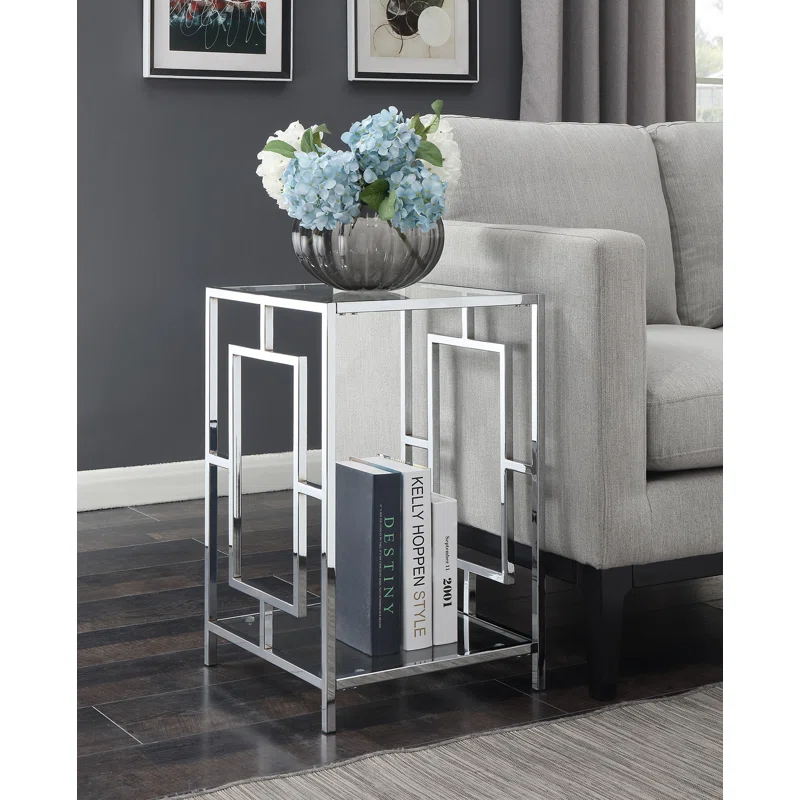
Chrome Metal End Glass Table
Grace your space with this luxuriously fine glass and chrome metal end table. Its sturdy metal tube frame creates an open and stylish design focusing on a geometric silhouette. The tempered glass shelves are removable, making it easy to clean and maintain. A gentle wet wipe removes all dirt and fingerprints from the two-tier shelves.

Cute Pink End Table
This Pinteresty pink end table not only looks adorable but also offers multi-purpose use in girls’ settings. Its powder-coated metal frame gives it a fresh and airy vibe, while 2 large storage drawers with label papers help organize everything. There is also a basket and 4 hooks at the table side for easy access.

Dice-Inspired Wood Top End Table
Bring this dice-inspired end table to your living space for its solid wood construction and unique appearance. Its sturdy build with clean lines makes it stand out. Round dot accents even give the table a more realistic look. The upper block’s woodgrain brings a rustic touch, and the base block with whitewashed finish adds a vintage feel.

Fluted Black Cylindrical End Table with Charging Station
This fluted black end table ensures modern aesthetics with smart functionality. Its cylindrical style with vertical fluted paneling gives the table a refined texture, and the round silhouette softens the design. Two smoothly sliding cabinet doors with vertical handles provide concealed storage. A built-in charging station also gives you ease of charging multiple devices in one place.

Geometric Block-Style End Table
If you are looking for durability with modern style and statement, then this block-style end table is built for you. Its glass fiber-reinforced concrete material makes the table strong beyond imagination. Above all, its geometric silhouette with square top and rectangular legs gives it an architectural look in any living room decor.

Hand-Painted Ceramic End Table
Your living space deserves this handcrafted and beautifully painted ceramic end table. Its floral tiles with alternate blue blocks bring a sense of symmetry and geometric pattern to the space. This table requires no assembly and is ready to display right out of the box. Just handle it with care and always clean with a gentle wet wipe.

Mint Green Metal End Table
This mint green metal end table is a simple yet elegant furniture piece that brings sophistication to your living space. Its snap design allows you to adjust the height of the middle board as per your convenience. The rust-proof and highly durable metal also keeps the table stable on the floor.

Modern Dyed Thermoplastic End Table
Go bold with this lilac sculptural end table. It brings a pop of color with its vibrant and playful energy. The wavy groove pattern further adds organic appeal and texture. Its smooth and glossy finish gives it a refined, modern appearance, making it an ideal choice for contemporary, eclectic, and minimalist interiors.

Orange Tray Top Iron End Table
Add an instant splash of color to your bland living and enjoy your day. Its hand-crafted iron top features embossed detailing to bring texture and warmth. Its 18 to 24” diameter gives you plenty of space to display your favorite vase or planters. The sturdy black iron frame with cross-bar support ensures stability and durability.

22” High Handwoven Rattan End Table
This coastal style end table meets all your expectations—the depth, warmth, and organic texture. Its 22” high handwoven design with 2 shelves effortlessly brings a serene effect to the space. The detachable tabletop serves as a tray for added convenience, and the scalloped detailing adds visual interest to the table.
Posted By Lisa